
Biscuits, Barrels, and Populism: Why Change Matters
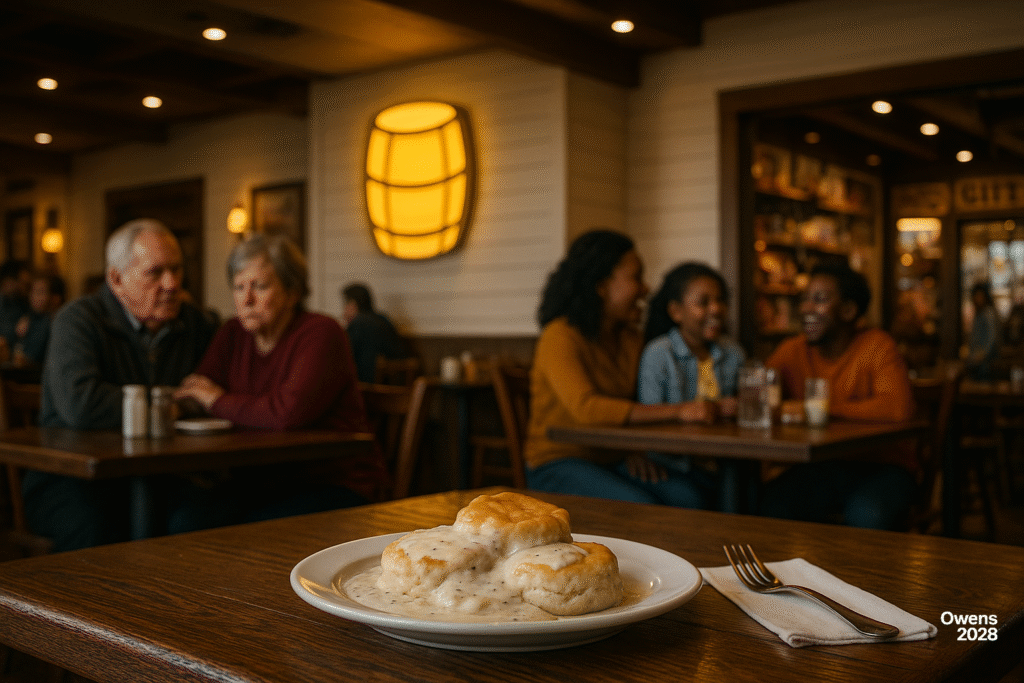
I’ve been in those Cracker Barrel dining rooms — biscuits and gravy on the table, kids laughing in the gift shop, and someone always grumbling about the noise. The old logo is gone now, the décor’s shifting, and the outrage machine is losing its mind. But let’s be clear: this isn’t about pancakes or rocking chairs. It’s about fear of change.
People aren’t really angry about a font or a barrel icon. They’re angry because change feels like the ground moving beneath them, and instead of walking forward, they’d rather cling to the past until their fingers bleed.
The Logo That Broke the Internet
Cracker Barrel decided to modernize. Out goes the man in overalls on a rocking chair — the iconic image that’s hung above entrances since the 1970s. Out goes “Old Country Store” as the tagline. What’s left? A cleaner, simplified barrel mark and bold word lettering.
Inside, the company’s investing hundreds of millions to update restaurants: brighter spaces, less wall clutter, a fresh menu rollout. They call it “All the More” — an attempt to make the place less like your grandmother’s attic and more like a welcoming, modern eatery.
And what happened? The same people who cry “Don’t mess with tradition!” lit their torches and stormed online. Social media filled up with outrage videos, complaints about “wokeness,” and declarations of boycotts.
But let’s be honest: the people shouting loudest aren’t really there for the biscuits anymore. They’re there to hear themselves yell.
Outrage as a Business Model
We’ve seen this show before. Bud Light puts a trans influencer on a beer can, and suddenly half the country pretends they’ve never liked light beer. Target puts out Pride merchandise, and people make viral videos throwing tantrums in the aisles. Disney speaks up about inclusion, and politicians try to legislate them into silence.
Here’s the pattern: a brand evolves, the culture warriors go nuclear, and then the younger generation shrugs, keeps shopping, and eventually becomes the core customer base. The outrage fades, but the growth remains.
That’s not weakness. That’s strategy. You don’t grow a business by staying chained to customers who are aging out, eating less, and refusing to spend. You grow by meeting the next wave where they are — open, hungry, ready to buy.
Cracker Barrel’s move isn’t risky; it’s survival.
Nostalgia vs. Reality
The truth is, most of the people fuming online aren’t mad about food or furniture. They’re mad because change makes them feel irrelevant. Nostalgia is powerful. It convinces people that the old days were better — even if those old days were full of exclusion, silence, or things we’d never want to return to.
That’s why symbols like logos matter more than they should. They become the battlefield for larger fears — not about a restaurant, but about a country that refuses to stay frozen in the 1950s.
The reality? You can honor the past without being trapped by it. Cracker Barrel knows it. Other companies know it. The problem is, too many people mistake evolution for betrayal.
The Populist Reality Check
Populism isn’t about holding onto the past like a security blanket. It’s about building for the people who are here now. It’s about making sure the future works for everyone, not just the loudest complainers in the corner booth.
The populist truth is simple: the people who whine the loudest are almost never the majority. They’re just the most fragile. The real majority — working parents, kids excited about pancakes, grandparents who don’t care what’s on the wall as long as the food’s hot — they’re too busy living life to throw a fit about a barrel logo.
That’s where change wins. Because populism, at its core, says: the future belongs to the people, not the gatekeepers of the past.
I’m traveling coast to coast, meeting Greens, supporting down-ballot candidates, and connecting with you directly where you are. Unlike career politicians, I fund my journey by working gigs like DoorDash and Instacart—time that could be spent building real change.
If you believe in this movement and want to help me dedicate more of my time to meeting voters and supporting our shared mission, click the image below to show your support. Together, we can build something lasting for 2026, 2028, and beyond.
